
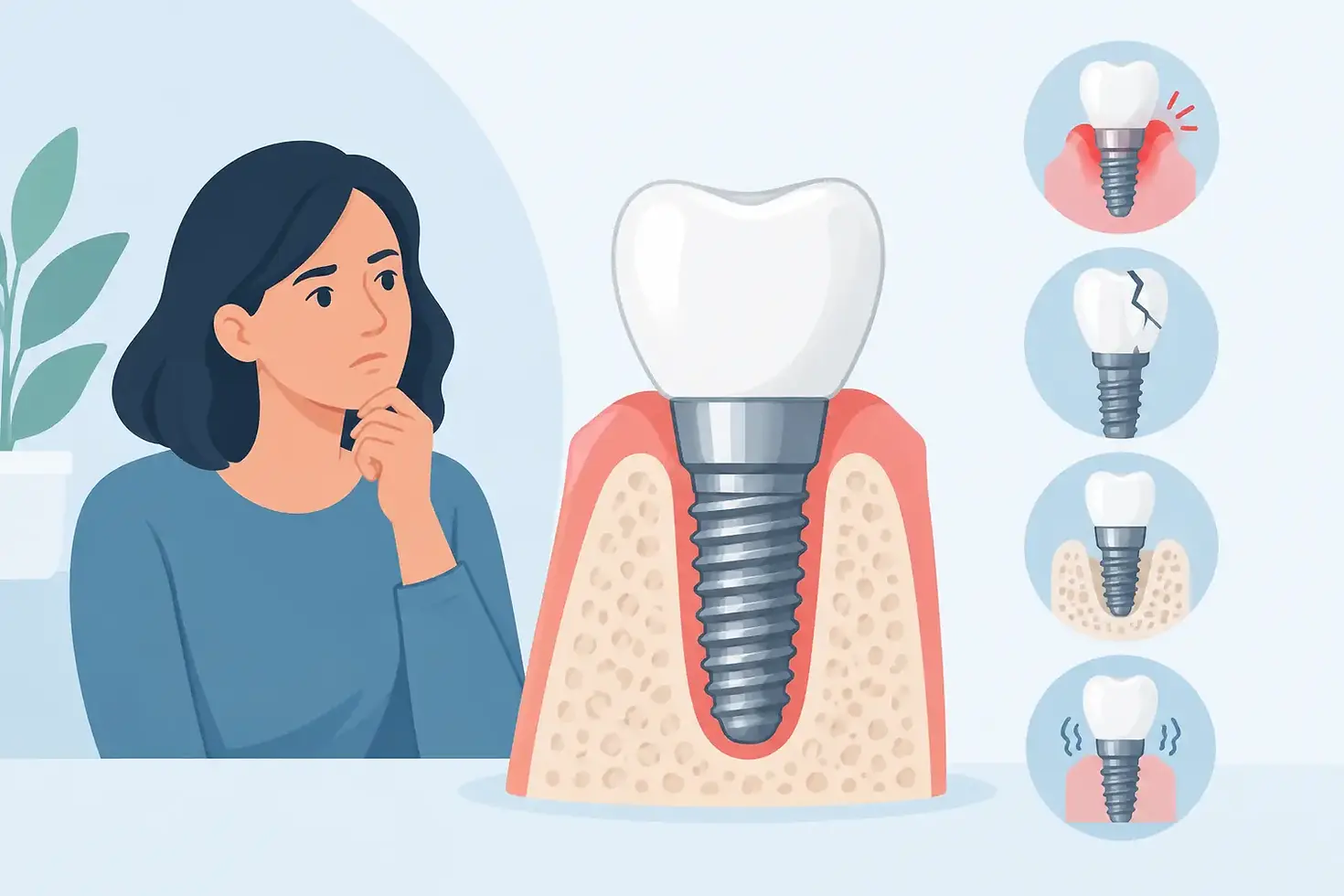
Can Dental Implants Fail? Causes and Warning Signs

A dental implant is designed to feel like part of your smile, so hearing that something may be wrong can be unsettling. Can dental implants fail? Yes, they can, but failure is not the expected outcome, and many problems can be treated successfully when they are found early. The best next step is not to panic or ignore a change. It is to have your dentist take a close look.
Dental implants have a strong long-term success rate, especially when they are carefully planned and supported by healthy habits and regular dental visits. Still, an implant is a medical restoration, not a maintenance-free replacement tooth. Your gums, jawbone, bite, overall health, and home care all continue to matter.
Can Dental Implants Fail After They Heal?
Implant problems can happen at different points in the process. An implant may not fully bond with the jawbone during the first few months after placement. This is often called early implant failure. In other cases, an implant may be stable for years and then develop problems due to infection, bone loss, excessive pressure, or damage to the restoration attached to it.
It also helps to separate an implant failure from a problem with the crown. The implant is the small post placed in the jawbone. The crown is the visible tooth replacement attached to that post. A chipped crown, a loose screw, or a worn restoration can be frustrating, but it does not always mean the implant itself has failed. These concerns are often repairable without removing the implant.
True implant failure generally means the post has not integrated with the bone, has become loose, or has lost enough support that it can no longer remain healthy and stable. Your dentist can determine what is happening with an exam and appropriate X-rays.
Common Reasons Dental Implants Can Fail
Most implant failures are not caused by one single mistake. They usually result from a combination of healing factors, oral health conditions, and pressure over time.
Infection around the implant
Peri-implantitis is an infection and inflammation of the gum and bone around an implant. It is similar to gum disease, though it can sometimes progress more quickly around an implant. Plaque buildup below the gumline can irritate the tissues, cause bleeding or swelling, and gradually lead to bone loss.
People with a history of periodontal disease may have a higher risk, but that does not automatically rule out implants. It simply means ongoing professional cleanings and careful home care are especially important.
Insufficient bone support or incomplete healing
For an implant to succeed, the jawbone needs to grow firmly around it in a process called osseointegration. If there is not enough healthy bone at the placement site, the implant may not have the support it needs. Some patients need bone grafting before implant placement to create a stronger foundation.
Healing can also be affected by certain medical conditions, poor nutrition, smoking, or medications that influence bone metabolism. A thoughtful health review and personalized treatment plan help identify these concerns before treatment begins.
Smoking or tobacco use
Smoking and other tobacco use can reduce blood flow to the gums and slow healing. It also raises the risk of infection and gum disease. This does not mean every person who uses tobacco will have an implant problem, but it does make the decision more complex.
If you are considering an implant, reducing or stopping tobacco use can make a meaningful difference for your healing and long-term result. Your dental team can discuss what is realistic and how timing may affect your treatment.
Too much biting pressure
Teeth are built to handle significant force, but repeated clenching or grinding can place intense pressure on an implant crown, screw, and surrounding bone. An uneven bite can create similar strain. Over time, this may contribute to loosening, fractured components, or bone changes around the implant.
A custom nightguard may be recommended for patients who grind their teeth at night. Adjusting the bite or replacing a worn crown can also protect the implant from unnecessary stress.
Poor daily care and missed checkups
Implants cannot get cavities, but the gums and bone around them can still become infected. Brushing twice a day, cleaning between teeth and around implants, and attending routine hygiene visits are essential. The right cleaning tools depend on your restoration, gum health, and the spacing between your teeth, so personalized guidance is worth asking for.
Regular visits also allow small issues, such as inflammation or a loose screw, to be addressed before they become bigger and more expensive problems.
Warning Signs You Should Not Ignore
A healthy implant should feel secure and comfortable. Mild soreness is normal immediately after surgery, but pain, swelling, or instability that develops later deserves attention.
Call your dentist if you notice bleeding when brushing around the implant, persistent bad taste or bad breath, red or swollen gums, pus, pain when chewing, gum recession, or a crown that feels loose. A clicking sensation may indicate a loose component rather than a loose implant, but it still needs an examination.
One important distinction: the implant post itself should not move. If you feel movement at the implant site, contact your dental office promptly. Do not try to tighten anything at home or wait to see if it settles down.
What Happens If an Implant Has a Problem?
Treatment depends on the cause and how early it is discovered. If the crown is loose or damaged, your dentist may be able to tighten or replace a component while leaving the implant in place. If inflammation is caught early, professional cleaning, improved home care, and targeted treatment may help protect the surrounding tissues.
When there is more significant infection or bone loss, treatment may involve deeper cleaning around the implant, medications when appropriate, and sometimes surgical care to manage the affected area. Not every implant can be saved, particularly if it is mobile or has lost substantial bone support.
If removal is necessary, it is not necessarily the end of your options. After healing, some patients can receive a new implant. Others may benefit from bone grafting first, a bridge, or another restorative solution that better fits their oral health and goals. An honest discussion should include the likely benefits, limitations, cost considerations, and expected timeline for each path.
How to Help Your Dental Implant Last
The most reliable approach begins before the implant is placed. A complete evaluation should consider your gum health, bone level, bite, medical history, medications, and whether you clench or grind. Taking time to plan can prevent avoidable complications later.
After placement, follow the healing instructions closely, take prescribed medications as directed, and keep all follow-up appointments. Once the final crown is in place, treat it like a natural tooth: brush thoroughly, clean between your teeth every day, and see your dentist for regular preventive care.
At West 56th Dental, we believe implant care should never feel rushed or impersonal. Whether you are considering an implant or concerned about one you already have, you deserve clear answers and a treatment plan built around your comfort.
A change around an implant does not automatically mean failure. It is simply a reason to check in. Early care can often preserve your comfort, protect your investment, and help you keep smiling with confidence.


Comments