
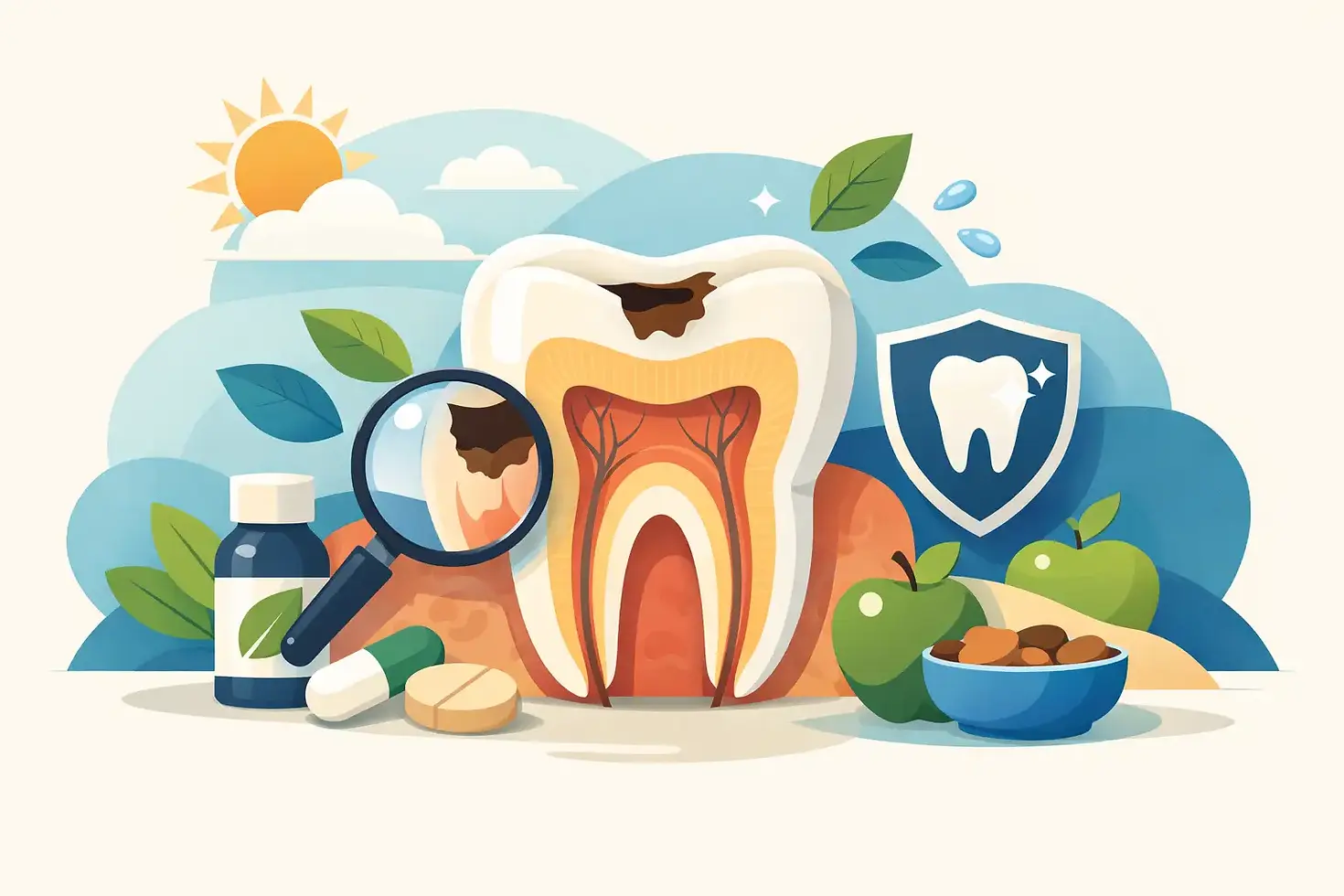
Can Cavities Heal Naturally? What to Know

You notice a spot on your tooth, maybe a little sensitivity when you sip something cold, and the first question that comes to mind is simple: can cavities heal naturally? The honest answer is that it depends on how far the decay has progressed. Very early tooth damage can sometimes be stopped or even repaired at the enamel level, but a true cavity, meaning a hole in the tooth, will not grow back on its own.
That distinction matters because a lot of confusion online comes from using the word cavity to describe every stage of tooth decay. In a dental office, we think about decay as a process. It often starts with mineral loss in the enamel, then moves deeper into the tooth if it is not treated. The earlier it is caught, the more conservative the solution can be.
Can cavities heal naturally in the early stage?
In the earliest stage, before a hole forms, the tooth may be able to remineralize. That means minerals like calcium and phosphate can be redeposited into weakened enamel. Saliva helps with this naturally, and fluoride makes the process more effective by strengthening the enamel surface.
This is why a chalky white spot on a tooth is very different from a dark, soft area that has already broken down. A white spot lesion can sometimes improve with better home care, fluoride exposure, diet changes, and regular monitoring. Once decay creates structural damage in the tooth, though, the body cannot rebuild that lost tooth shape the way it can heal a cut on your skin.
So if you are asking whether a tooth can reverse a little early damage, the answer may be yes. If you are asking whether a drilled-size cavity can close itself back up, the answer is no.
What actually happens when a cavity forms
Your mouth is always balancing two opposite processes. One is demineralization, when acids from plaque bacteria wear minerals out of enamel. The other is remineralization, when saliva and fluoride help restore those minerals. If the balance tips too often toward acid attacks, the enamel weakens.
At first, there may be no pain at all. That is one reason cavities can be easy to ignore. But as decay moves through enamel and into dentin, the softer layer underneath, the tooth becomes more vulnerable. Sensitivity, food trapping, discoloration, or pain may start to show up. If it continues deeper, the nerve can become inflamed or infected, which may lead to a root canal or extraction if the tooth is not treated in time.
This is also why waiting to see whether something will heal naturally can be risky. Early decay is often quiet. By the time it hurts, the problem is usually no longer in that reversible stage.
Signs that enamel may be repairable
There are some situations where we may recommend strengthening and monitoring rather than immediately placing a filling. This is more likely when the damage is limited to enamel and has not created a visible opening in the tooth.
You might be in that early stage if you have white spots near the gumline, mild sensitivity without constant pain, or an area that shows early change on an exam or X-ray but has not cavitated. In children and teens with developing habits, and in adults who have had a recent increase in dry mouth, snacking, or orthodontic treatment, these early changes are especially common.
Even then, it is not a do-it-yourself diagnosis. Two spots can look similar at home and be very different clinically. One may respond well to fluoride and habit changes. The other may already need a filling.
When natural healing is no longer possible
Once there is a true cavity, natural healing is no longer enough. A cavity means the tooth structure has broken down. The lost enamel and dentin do not regenerate into their original form.
At that point, treatment is about removing the damaged area and restoring the tooth so bacteria cannot keep moving deeper. Depending on the size and location, that may mean a filling, crown, root canal, or another restorative option. Catching it sooner usually means a smaller, simpler repair.
This is often the most reassuring part for patients to hear: needing treatment does not mean you did something wrong. Cavities happen for a lot of reasons, including genetics, medications that cause dry mouth, crowded teeth, past dental work, diet patterns, and simply not being able to see what is happening between teeth. Good people with good habits still get cavities.
What helps early decay improve
If your dentist finds early enamel demineralization, the goal is to shift the mouth back toward repair. That usually starts with fluoride. Prescription-strength fluoride toothpaste, fluoride varnish, or other professional treatments can help strengthen weakened enamel.
Home care matters just as much. Brushing twice a day with fluoride toothpaste and cleaning between teeth daily helps reduce the bacteria and plaque that feed the decay process. Diet plays a major role too. It is not only about how much sugar you eat, but how often your teeth are exposed to it. Frequent snacking, sipping sweet drinks, or even constantly drinking acidic beverages can keep the mouth in a cycle of demineralization.
Saliva is another big piece of the puzzle. A dry mouth makes cavities more likely because saliva helps neutralize acid and deliver minerals to the teeth. If you take medications that dry your mouth, breathe through your mouth at night, or often feel thirsty, mention that at your dental visit. Sometimes a small adjustment in your routine can make a real difference.
The truth about home remedies and online advice
A lot of patients ask about oil pulling, supplements, special diets, or so-called natural cavity cures. While some healthy habits may support better oral health overall, none of these should be counted on to repair an actual hole in a tooth.
That does not mean every natural approach is useless. Eating a balanced diet, reducing frequent sugar intake, staying hydrated, and supporting saliva flow are all helpful. But they work best as part of prevention or early intervention, not as a replacement for professional diagnosis and treatment.
The problem with internet advice is that it often skips the question that matters most: how deep is the decay? Without that answer, it is easy to delay care while the cavity gets larger. What starts as a small filling can become a much bigger procedure if too much time passes.
How dentists decide whether to watch or treat
When we evaluate tooth decay, we are not just looking for a yes or no answer. We are looking at the stage, location, risk level, and rate of change. A tiny area between two teeth in a patient with excellent home care may be watched and managed conservatively. The same-looking area in someone with dry mouth, frequent decay, or poor visibility for cleaning may need treatment sooner.
This is where personalized care really matters. Dentistry is not one-size-fits-all, and cavity treatment should not be either. A careful exam, X-rays when needed, and an honest conversation about your habits and symptoms help us recommend the right next step without overtreating or underreacting.
For families, this matters even more. Kids, teens, and adults all have different cavity risks. A neighborly practice should explain what is happening clearly, answer questions without pressure, and help you make a decision that feels informed.
Can cavities heal naturally if they hurt?
If a tooth is hurting, the chances that the problem is still in a reversible stage are lower. Pain can mean the decay has reached dentin or is getting close to the nerve. It can also mean there is a crack, gum recession, or another issue that needs attention.
That does not mean every sensitive tooth needs major treatment, but it does mean it is worth checking soon. Waiting on a painful tooth rarely makes things simpler. The earlier you know what is causing the discomfort, the more options you usually have.
The best next step if you are unsure
If you think you may have a cavity, the goal is not to panic. It is to get clarity. Some early areas of enamel damage can improve with fluoride and consistent preventive care. True cavities cannot heal naturally, but they can be treated before they become more serious.
At West 56th Dental, we believe patients deserve straight answers, gentle care, and a plan that makes sense for their real life. If something feels off, trust that instinct and have it looked at. A small conversation now can spare you a much bigger problem later, and that is one of the simplest ways to protect your smile for the long run.


Comments